
Was this page helpful?
Your rating will help us improve our website.





Plumbing Practice Note
The purpose of this Practice Note is to provide plumbing practitioners and homeowners with guidance on the regulatory requirements for water pressure within a property, and to outline the measures that could be taken to ensure compliance with Regulation in the NCC and relevant Australian Standards.
The content below provides guidance on:
For guidance on the plumbing regulatory framework refer to Plumbing Practice Note RF-01 | Regulatory Framework
Watch this short video
Under the Victorian Plumbing Regulations 2018, plumbing work must comply with the Plumbing Code of Australia (PCA) NCC Volume 3.
The maximum static pressure at any outlet (point of discharge) within a building must not exceed 500 kPa (except at fire service outlets). This applies to all new and altered plumbing work for cold and hot water.
The PCA specifies NCC clauses: Cold water (B1P6) and Heated water (B2P10) services and relevant performance requirements, as the maximum pressure at the point of discharge must be 500 kPa (except at fire service outlets).
Pressures exceeding 500 kPa can result in water hammer, reduce the service life of appliances, taps, fittings, and cause excessive noise within the system.
A practical way to determine the maximum static pressure is to connect a calibrated pressure gauge to the meter outlet located at the property boundary or the adjacent garden tap if installed. This will indicate the static pressure supplied by the water authority. If the measured pressure exceeds 500 kPa, a pressure-limiting and or pressure reduction valve must be installed.
Please note that kPa pressures are subject to fluctuation, and the recorded measurement represents the static pressure at the time the licensed plumber conducted the test.
The plumbing practitioner has a responsibility to inform the homeowner if the pressure exceeds 500kPa and to advise that a pressure limiting and or pressure reduction valve is required in accordance with the Plumbing Regulations and NCC volume 3 (Plumbing Code of Australia).
The plumber should maintain clear documentation and records of all works carried out and any recommendations made to the homeowner including details of any pressure readings recorded
All pressure limiting valves and pressure reducing valves must be suitable for their intended purpose, comply with the applicable material and plumbing product requirements in accordance with the NCC.
Any product intended for use in contact with drinking water must comply with AS/NZS4020 or hold a WaterMark Licence issued in accordance with the relevant requirements.
Pressure limiting and pressure reduction valves may be installed at any location within the supply line, provided they remain readily accessible for inspection, adjusting, maintenance, and replacement.
Additional pressure reduction or limiting may be added to the heated water line if pressure exceeds the 500 kPa maximum.
The images below are indicative examples only and do not represent mandatory or approved installation locations. Pressure limiting or pressure reduction valves must be selected and located based on site-specific conditions. The final determination of device type, sizing, and location rests with the qualified plumber.
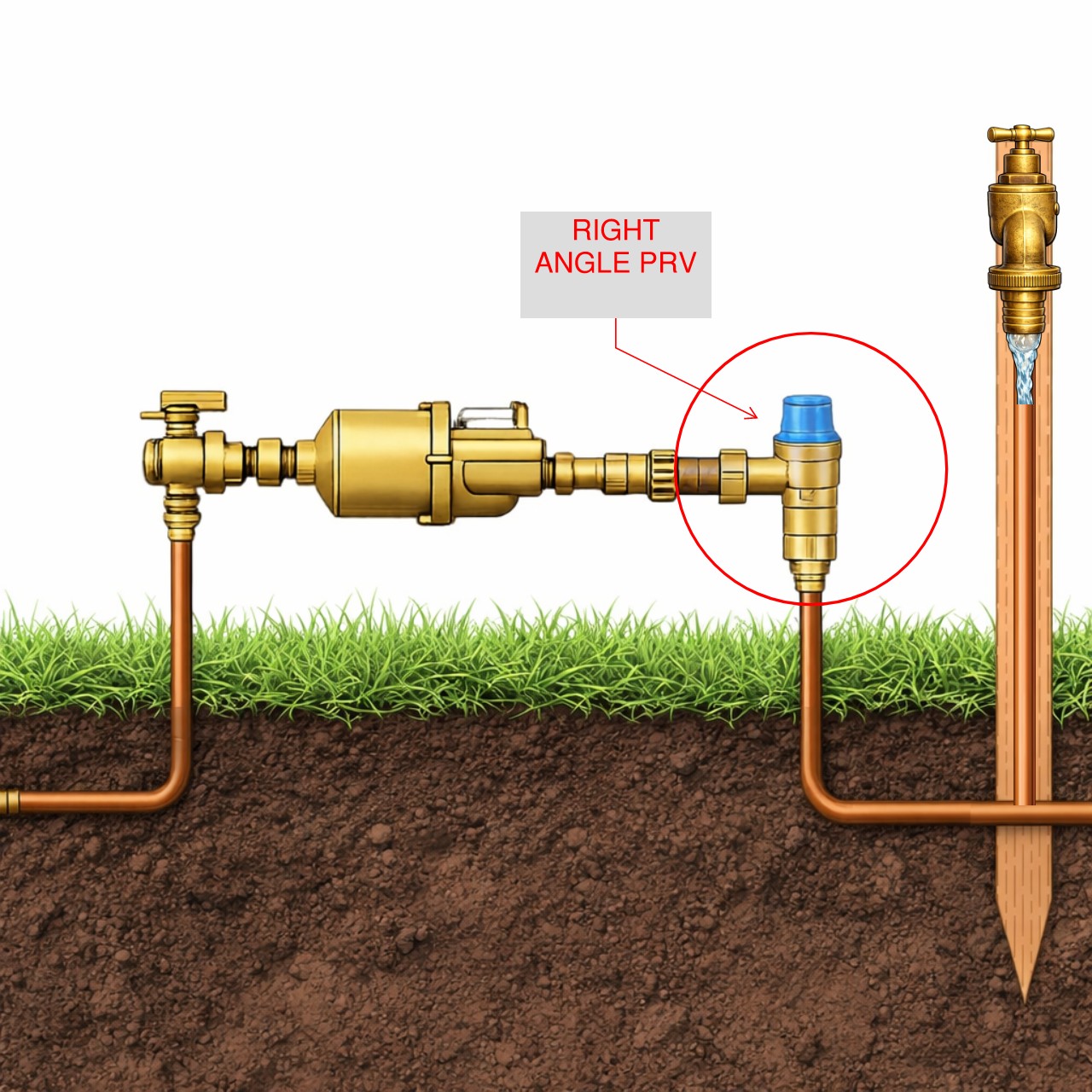
Figure 1: Right-angle PRV - 3500.1
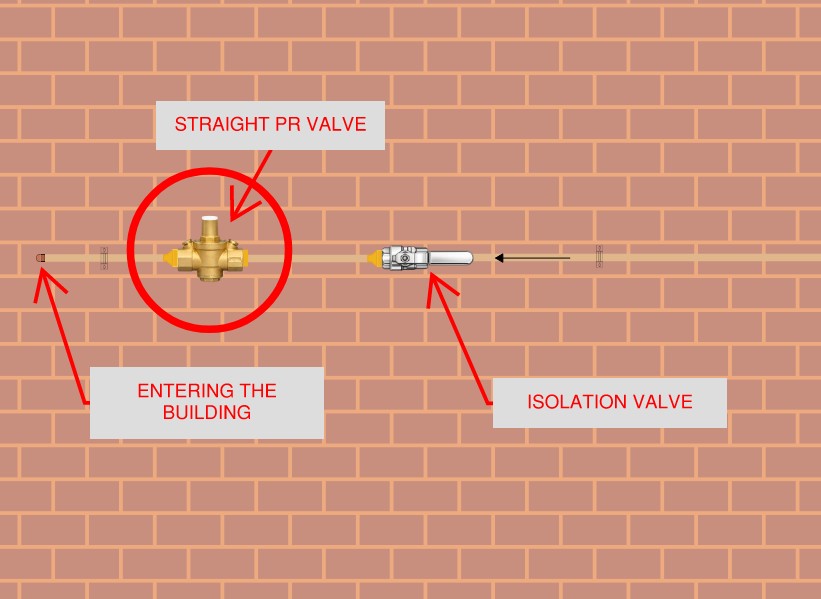
Figure 2: Straight PRV
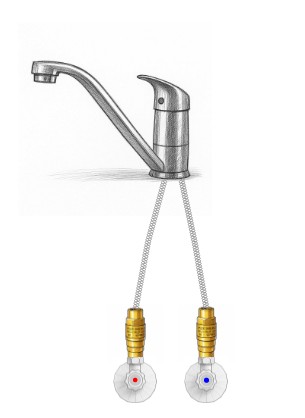
Figure 3: Inline PLV
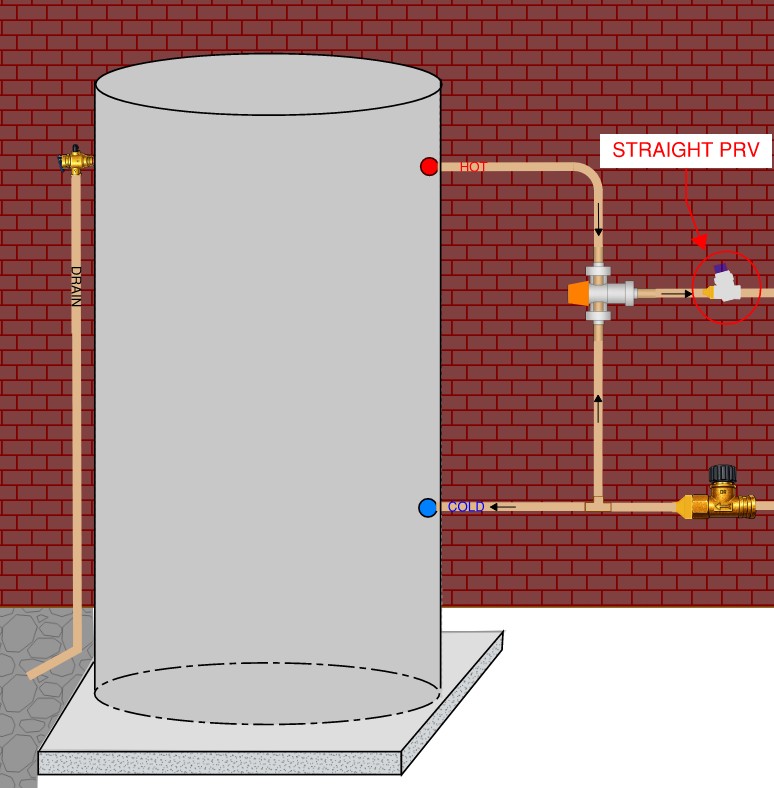
Example of an inline pressure reducing valve for a Heated Water Unit
If you have a technical enquiry, please email plumbingtechnicaladvice@bpc.vic.gov.au or call 1300 067 088.