
Was this page helpful?
Your rating will help us improve our website.





Condensation, water ingress and moisture damage have been increasingly observed in Victorian residential buildings.
Water damage routinely tops the list of defects encountered in buildings and in complaints and disputes to us and claims to the Victorian Managed Insurance Agency (VMIA).
Water ingress is when water makes its way into a building. It can occur for various reasons and in different ways, including through condensation. This can lead to immediate damage or slow deterioration of building elements. If left untreated, it may lead to severe structural damage and expensive repairs, or health issues from mould growth.
Condensation occurs when warm, moist air comes into contact with a cold surface and condenses into water droplets.
Air has the capacity for holding water vapour otherwise known as humidity. As moisture-laden air gets close to cold surfaces – such as walls, floors, sub-floor areas, roof spaces – it starts to get cooled and so the relative humidity increases; the greater it is cooled the higher the relative humidity. When moisture-laden air touches a cold surface, the temperature of the air drops below the dew point temperature and water droplets form.
Condensation in your home can be caused by:
Where there is a lot of condensation it can cause problems with damp and mould.
Mould grows best in damp and poorly ventilated areas.
Common signs of a condensation problem or risk of mould in your home include musty or damp smells as well as visual signs, including:
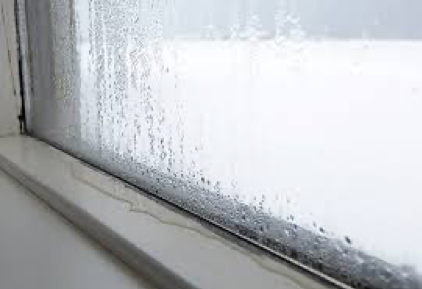
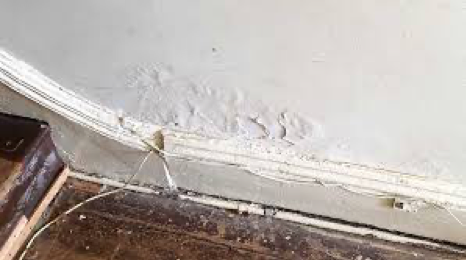
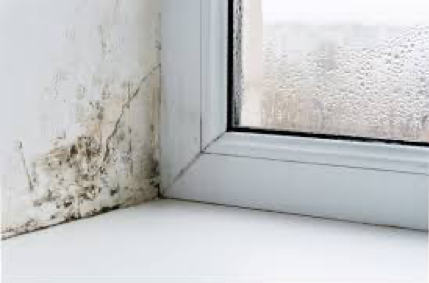
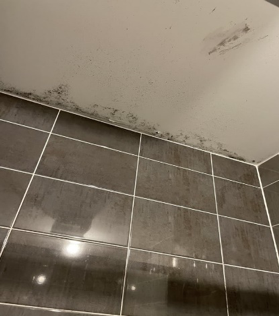
Homeowners, tenants, and property owners should regularly check for signs of condensation or water damage inside the home. If not checked or maintained regularly, the consequences potentially pose serious safety and health risks.
Generally, the longer condensation or water ingress is left untreated the greater the risk of mould growth, property damage and rectification costs.
There are simple steps you can take to protect your property and your health (and the health of those living with you).
We supported a research grant to the University of Tasmania in 2021 to conduct research on mould growth risk in external wall systems used in the construction of new homes in Victoria. The research analysed Victorian housing information for nine external wall systems across Victorian climate types and the requirements in the National Construction Code.
The research identified opportunities to reduce the risk of mould growth in new homes through enhancements that could be made to external wall systems, namely increasing the vapour permeability of the exterior membrane (to allow water vapour to flow into and out of a building), using a vented and drained cavity (to drain moisture that may accumulate in the wall spaces), and introducing an interior vapour control membrane, or a combination of these.
Some of these enhancements will be introduced into the National Construction Code 2025.