
Was this page helpful?
Your rating will help us improve our website.





The BPC has a range of tools to:
The tools available depend on the type of work, the seriousness of the non-compliance, and the timeframes when the non-compliance is detected.
We apply our regulatory tools and powers to achieve the maximum positive impact on individual practitioners compliance and overall industry performance.
This includes how we communicate disciplinary outcomes and legal proceedings to inform consumers and other practitioners.
The BPC uses different tools to keep Victorians safe and make sure building and plumbing work follows the law.
Our starting position is to educate and advise practitioners on their obligations. We can escalate to different enforcement actions, depending on what went wrong and how serious it is.
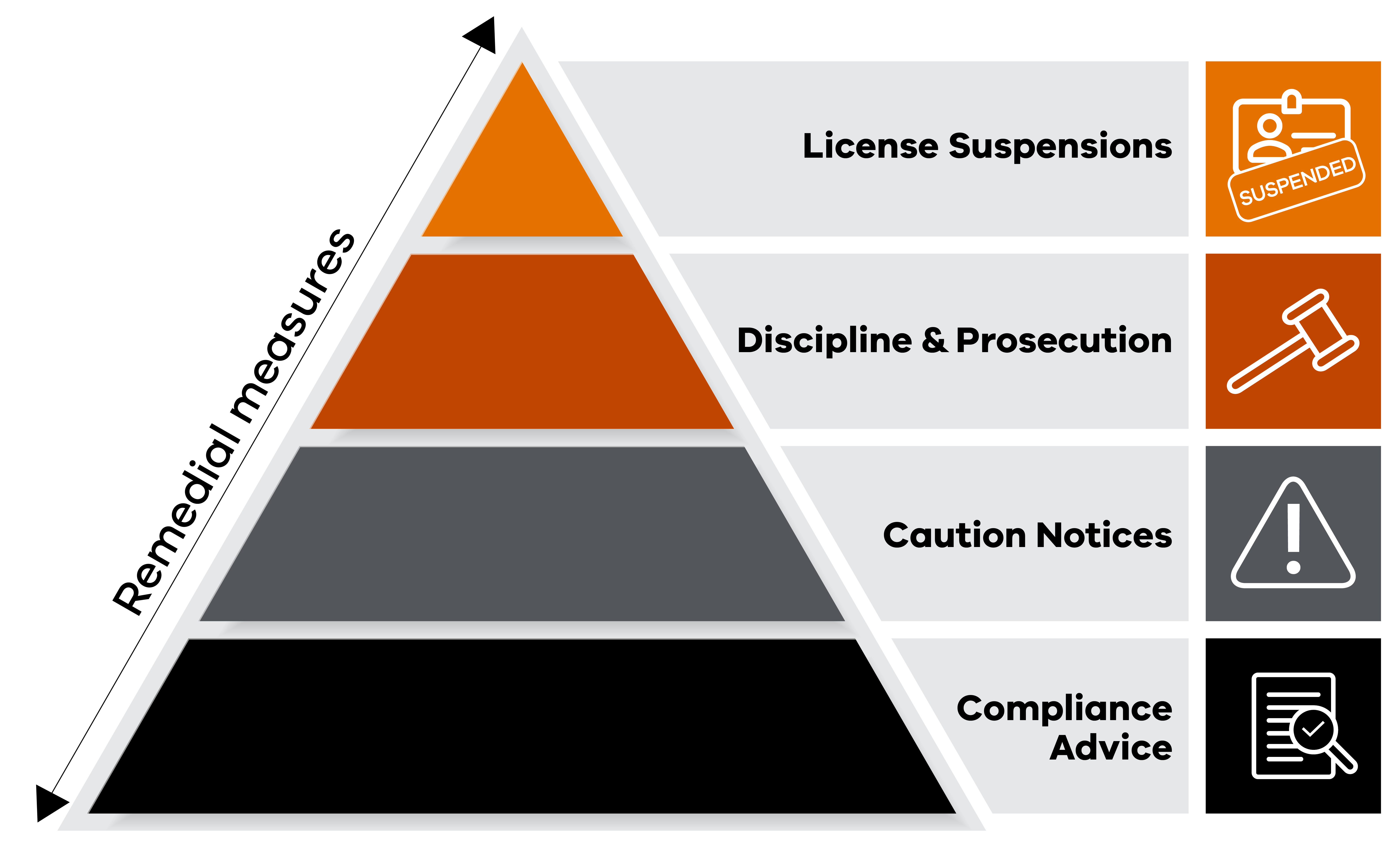
The regulatory pyramid is a tiered framework showing how the Building and Plumbing Commission escalates responses from guidance to enforcement.
As well as general education, our staff may provide advice to practitioners in person, through an inspection report, or by written notice to help people understand their legal obligations.
These are a formal document that lets a practitioner know they appear to have breached their requirements. It gives them a chance to correct their behaviour. Depending on the situation, we may issue a conduct notice or a caution.
Cautionary notices are not published, but they form part of the compliance history of a person and will be accounted for in how we focus our compliance monitoring, and in case of future breaches.
Remedial measures are legal tools we use to require the practitioner to fix problems, so the work complies. These measures focus on getting things right, not punishment. They can be done alongside other enforcement responses.
When a practitioner’s conduct needs to improve, we may give a reprimand, require extra training, or apply a fine. This holds them to account for their conduct and helps prevent future issues.
Disciplinary actions are published on a register, so other people can understand the compliance history of that practitioner.
For serious or urgent breaches, we may take a case to court. The court can order someone to stop certain activities, fix the problem, or pay a fine. See prosecutions and injunctions.
We must suspend or cancel registration in defined situations, such as when a company goes into administration. If a practitioner’s work puts the public at risk, we can also suspend or cancel their registration to stop them from working. We may also partially suspend a builder to ensure that they only continue working to fix an outstanding issue.
The suspension and cancellation information explains when these may apply.